 George
 About 60% of employers watch employee emails to make sure they use company resources right. This shows how common email watching is in work places in the U.S.
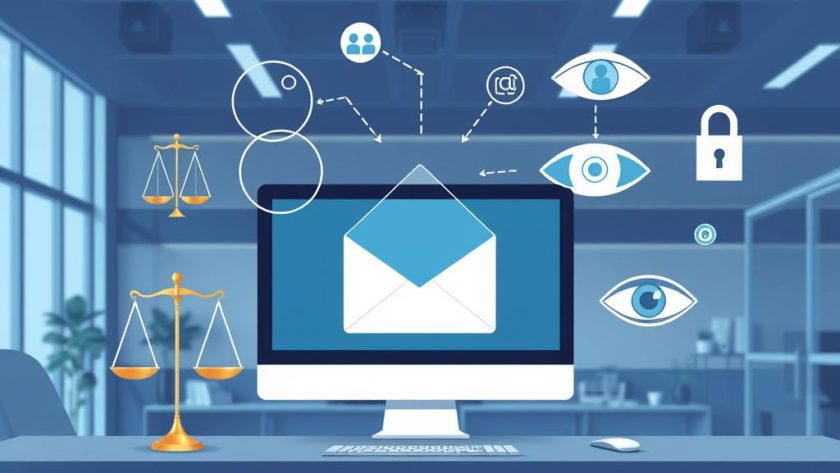
Watching employee emails is key in today’s work world. With more people working from home and using digital tools, bosses use tech to keep an eye on work talks. The rules about watching emails at work are not the same everywhere.
In the U.S., a law from 1986 lets bosses watch emails on work devices. This means your boss can look at emails sent through work email systems. They don’t have to ask permission much.
Watching emails at work makes people wonder about privacy. Bosses have good reasons to watch, but workers need to know their rights too.
Key Takeaways
- 60% of employers monitor employee emails
- Federal law allows monitoring of work-related communications
- Different states have varying regulations on email surveillance
- Employees should be aware of company monitoring policies
- Workplace email monitoring can impact employee privacy
Understanding Email Monitoring in the Workplace
Email monitoring is key in today’s work world. Companies use it to keep their interests safe and work smoothly.
In today’s digital world, tracking emails is a mix of tech, law, and work management. Bosses use tools to see how people talk and keep secrets safe.
What Is Email Monitoring?
Email monitoring means watching and studying emails at work. It includes:
- Looking at email content and files
- Tracking how often emails are sent
- Seeing who talks to whom
- Finding security risks
Why Do Employers Monitor Emails?
Employers have good reasons to watch emails:
- Security Protection: Keeping data safe and stopping leaks
- Compliance Management: Making sure they follow the law
- Productivity Assessment: Figuring out how well employees work
A big 70% of global business leaders have or plan to use monitoring tools. This shows more companies are watching emails at work.
Even though it’s legal, bosses must follow strict rules. The Electronic Communications Privacy Act helps guide them. It says they need clear rules and good reasons for monitoring.
Legal Framework Governing Email Monitoring
Understanding workplace monitoring laws is complex. It involves knowing federal and state rules. These laws are about how employers can watch emails.

The Electronic Communications Privacy Act (ECPA) is a key federal law. It lets employers watch emails on devices they own.
Federal Laws on Email Surveillance
In the U.S., laws give employers a lot of power to watch emails. Almost 80% of big companies check emails and internet use.
- Employers can track internet usage and email messages
- Monitoring is permitted on company-issued devices
- Federal wiretap laws restrict unauthorized communication interception
State Laws That May Apply
State rules on watching emails differ a lot. Some states have special rules for watching emails:
| State | Monitoring Requirements |
|---|---|
| Connecticut | Requires daily notification of monitoring |
| Delaware | Mandates employee notification |
| New York | Imposes fines for compliance violations |
| Texas | Allows one-party consent for monitoring |
The Role of the Employee Handbook
An email policy must be clear in the employee handbook. Being open is important for trust and following the law. About 70% of workers don’t know if their company is watching.
Companies should explain:
- How they watch emails
- What kind of messages they track
- Why they watch emails
- What happens if someone breaks the rules
Employee Privacy Rights Explained
Understanding work email privacy can be tricky. It’s important to know your digital rights at work. The rules keep changing with new tech and laws.
Employees have some privacy rights at work. But these rights are not complete. The idea of reasonable expectation of privacy is key in understanding these rights.
Understanding Reasonable Privacy Expectations
There are a few things that decide how private your emails can be:
- Company-owned devices have less privacy
- Work emails are seen as company property
- Employers can watch what you do on company networks
Personal vs. Work-Related Email Distinctions
Personal and work emails are treated differently. This affects your privacy a lot. Employers can watch work emails more closely.
| Email Type | Privacy Expectations | Employer Monitoring Rights |
|---|---|---|
| Work Email | Very Limited | Extensive Monitoring Permitted |
| Personal Email on Work Device | Partial Protection | Limited Monitoring Allowed |
| Personal Device | High Privacy Protection | Minimal Monitoring |
About 80% of companies watch emails. Knowing your rights can keep your info safe and your work life private.
Protecting Your Digital Privacy
To keep your emails safe, try these tips:
- Check your company’s email policy
- Keep personal stuff off work devices
- Use your own device for private talks
- Know what your company needs you to agree to
Employer Reasons for Monitoring Emails
Email monitoring is key in today’s work world. Employers use digital tools to keep their business safe and running smoothly.
Enhancing Security Measures
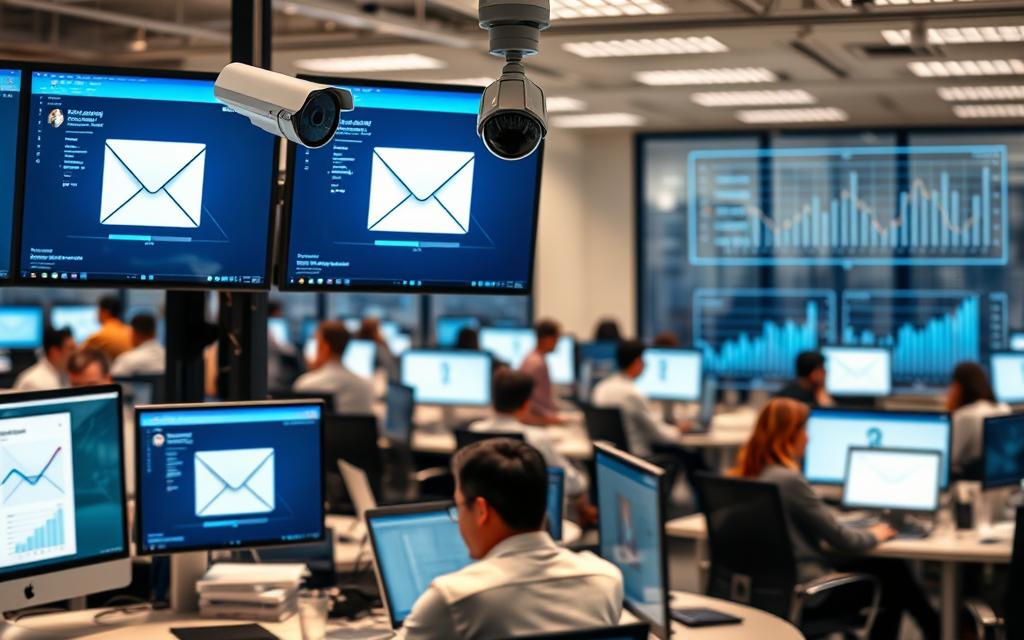
Keeping data safe is a big job for IT policies. Employers watch emails to stop security problems. About 71% of them use this method to stop misuse of company resources.
- Detect unauthorized data access
- Prevent possible cybersecurity threats
- Keep company secrets safe
Ensuring Compliance with Policies
Employers have the right to watch emails for more than just watching. About 65% of employers do this to follow the law. It helps keep the workplace professional and avoids legal trouble.
Improving Productivity
Watching emails can help see how well the workplace is doing. Research shows 45% of companies use this to check if people are working well. It helps them find ways to work better together.
But, it’s also important to be open about it. Around 80% of companies see better work results when they’re clear about monitoring.
Employee Consent and Notification
Understanding consent and notification is key in employer monitoring policies. The world of workplace data protection is getting more complex. This is because technology keeps changing, posing new challenges for everyone.

Employer cybersecurity policies need to be clear and agreed upon by both sides. Employers must follow certain rules when they monitor emails and other digital activities.
The Critical Role of Notification
Notification is very important for fair monitoring at work. It includes a few main points:
- Providing written details about monitoring
- Explaining what is being watched
- Telling what tools are used
- Why monitoring is done
Obtaining Legitimate Consent
Getting consent can differ from state to state. But, some common ways include:
| State | Consent Requirements | Notification Specifics |
|---|---|---|
| New York | Written agreement needed | Notice must be clear |
| Connecticut | Clear sign from employee | Notice every day |
| Delaware | Agreement signed by employee | Fine of $100 for breaking rules |
Employees should read monitoring agreements carefully. They need to know their rights and what monitoring might happen. Being open helps build trust between employers and workers.
The laws are always changing, with over 20 states protecting against too much monitoring. Employers need to keep up with these laws. This helps them respect employee privacy and stay legal.
Best Practices for Employers
Creating good email rules at work needs careful planning and clear talk. Bosses must deal with many rules while keeping work safe and respecting privacy.
- Make a detailed written email monitoring policy
- Tell all workers about the rules clearly
- Get clear yes from staff
- Follow privacy laws for business emails
Crafting Clear Monitoring Policies
A good policy should have clear rules and what’s expected. Studies show 60% of workers worry about being watched. So, it’s very important to talk openly.
| Policy Element | Key Considerations |
|---|---|
| Scope of Monitoring | Set clear rules for emails and online talks |
| Purpose | Tell why you’re watching (for safety, to work better) |
| Employee Rights | Make sure to say how you protect privacy and limits |
Employee Training and Engagement
Training helps workers understand the rules. If you talk clearly about watching, you can make workers trust you more. This makes a better work place.
- Have training every few months
- Give out clear papers
- Let workers talk about watching
By following these tips, bosses can watch emails in a way that keeps work safe and respects workers’ privacy.
Handling Violations of Privacy
Workplace email privacy is very important for employees. They need to know their rights to keep personal and work emails safe. With up to 60% of employers watching emails, it’s key to protect yourself.
Spotting a privacy issue in emails at work needs careful checking. Not all watching is wrong, but some actions are not right.
What Constitutes a Violation?
A privacy issue in email watching at work might be:
- Looking at personal emails without asking
- Getting too much personal info
- Watching emails when not working
- Sharing personal info without permission
- Keeping personal data too long
Steps Employees Can Take
If you think there’s a privacy problem, here’s what you can do:
- Keep a record of any odd email watching
- Check the company’s email rules
- Talk to HR
- Get legal advice if needed
| Violation Type | Potential Action |
|---|---|
| Unauthorized Personal Email Access | Internal Complaint |
| Excessive Data Collection | HR Investigation |
| Policy Breach | Legal Consultation |
Remember, knowing your rights is the first step in protecting your workplace privacy.
Technology Used for Email Monitoring
Today, watching emails at work is very important. Bosses use smart tools to keep an eye on emails. They want to keep things safe but also respect privacy.
Companies use many tools to watch emails closely. These tools do more than just see who sent what. They help understand how people talk at work.
Common Monitoring Tools and Software
- Content filtering systems
- Keyword scanning software
- Data loss prevention platforms
- Real-time email tracking applications
- Network traffic analysis tools
Data Collection Methods
There are many ways to collect data at work. Modern tools gather lots of info in smart ways.
| Monitoring Method | Key Features | Primary Purpose |
|---|---|---|
| Screenshot Capture | Visual record of employee screens | Productivity tracking |
| Keystroke Logging | Records all keyboard inputs | Security assessment |
| Email Content Scanning | Analyzes message text and attachments | Compliance verification |
| Network Traffic Analysis | Monitors email transmission patterns | Threat detection |
Setting up rules for work tech is tricky. Bosses need to think about what tools can do and what laws say. They must make sure they watch emails in a way that’s fair and open.
Balancing Monitoring and Trust
Workplace email privacy is a big challenge for today’s companies. Finding the right balance between keeping things safe and trusting employees is hard. Businesses need to make rules that protect everyone’s rights and keep the company safe.
Studies show that email watching can be tough. Fifty-five percent of companies say their team feels less happy when they watch their emails too closely. This shows how hard it is to watch over people without hurting the team’s spirit.
The Impact on Employee Morale
Employee rights and trust go hand in hand. Watching them too much can make them feel stressed:
- 60% of employees feel nervous when they know they’re being watched all the time
- 45% won’t talk about work issues online if they’re being watched
- This might make them less open to new ideas
Fostering a Transparent Workplace
Good companies talk openly about how they watch emails. Being open is the secret to keeping employees’ trust. Companies that share their rules see:
- 30% more trust from their team
- 50% less bad online talk
- A better work place vibe
The aim is not to stop watching emails but to find a fair way. This means talking about rules often, getting clear consent, and showing why you’re watching emails.
FAQs About Email Monitoring
Understanding employee email rights can be tricky. Laws about workplace privacy and email monitoring often confuse both bosses and workers. Let’s look at some common questions about email monitoring at work.
Can I Sue My Employer for Monitoring My Emails?
Whether you can sue depends on many things. In the U.S., bosses have a lot of freedom to check work emails. Here are important points to remember:
- Work emails on company devices are seen as company property
- Bosses must tell workers about email monitoring rules
- Monitoring must stay within fair limits
What Should I Do if I Feel My Privacy Is Violated?
If you think your privacy is being broken, here’s what to do:
- Check your employee handbook well
- Keep records of any privacy issues
- Talk to HR or a lawyer
| Monitoring Aspect | Legal Considerations |
|---|---|
| Work Email Monitoring | Generally Legal with Proper Notification |
| Personal Email on Work Devices | Limited Protection |
| Excessive Monitoring | Potential Privacy Violation |
Even though bosses can monitor emails, they must respect worker privacy. Being open and clear is key to a good work place.
Conclusion: Know Your Rights and Best Practices
Working emails need a careful balance. Employers have the right to watch, but so do workers have privacy. With more watching in work-from-home setups, knowing email rules is key for today’s workers.
Workers should know that 45 states let employers watch. It might feel like too much, but it’s to keep the company safe. Talking openly helps build trust, as 67% of workers feel better when they know what’s happening.
Importance of Staying Informed
Knowing what employers can do is very important. Studies show 55% of workers don’t know how their company watches. By learning about email rules, workers can keep safe and have honest talks with bosses.
Encouraging Open Communication
The best way is to have respect and clear talks. Companies that are open about watching and talk with workers stay happy and productive. Knowing and talking are the best ways to deal with email watching at work.