
 George
 Are you racing against time to understand the complex world of foreclosure in Ohio? What if knowing the precise steps could save your home and financial future?
The foreclosure process timeline in Ohio presents unique challenges for homeowners facing financial difficulties. Ohio is a judicial foreclosure state. This means all foreclosure proceedings must go through the court system. This creates a structured yet complex legal pathway.
Understanding Ohio foreclosure laws is key for anyone facing mortgage payment challenges. The process usually takes 6 to 12 months from the first missed payment to the final sheriff’s sale. This gives homeowners important chances to find alternatives and protect their property.
Navigating how long does foreclosure take in Ohio requires strategic knowledge and quick action. Each step in the process has big implications for homeowners. This makes early action and professional advice very important.
Key Takeaways
- Ohio follows a judicial foreclosure process requiring court involvement
- Foreclosure timeline ranges from 6 to 12 months
- Homeowners have multiple opportunities to challenge or resolve foreclosure
- Early communication with lenders can provide possible alternative solutions
- Professional legal advice can help protect homeowner rights
Understanding Foreclosure in Ohio
Foreclosure in Ohio can be tough to understand. The judicial foreclosure process is special. It needs a deep grasp of state laws and mortgage default steps.
Foreclosure is a legal way for lenders to take back a property. This happens when borrowers can’t pay their mortgage. In Ohio, the foreclosure steps are set up to help both lenders and homeowners.
What Defines Foreclosure?
The Ohio mortgage default process starts when a homeowner misses payments. This leads to legal actions that might end in the property being taken away.
- Missed payments trigger initial default notices
- Lenders start formal foreclosure actions
- The court gets involved in the process
Types of Foreclosure in Ohio
Ohio only uses judicial foreclosure. This means all foreclosure cases go through the court. This helps protect homeowners.
| Foreclosure Type | Key Characteristics |
|---|---|
| Judicial Foreclosure | Court-supervised process requiring legal filing and hearing |
| No Non-Judicial Option | All foreclosures must go through court system in Ohio |
Knowing about Ohio’s foreclosure steps helps homeowners make smart choices when money is tight.
Initial Stages of Foreclosure
The foreclosure process in Ohio starts with early warning signs. Homeowners need to know these signs. When mortgage payments are late, lenders send a notice of default. This marks the beginning of the risk of losing your home.
In Ohio’s pre-foreclosure period, homeowners have rights and chances to fix their money problems. The early stages are key to avoid losing your home.
Notice of Default Explained
A notice of default is a formal letter from your lender. It says you’ve missed mortgage payments. In Ohio, this letter usually has:
- Total amount of missed payments
- Deadline to catch up on payments
- What happens if you don’t pay
- How to contact them for help
Importance of the Grace Period
Ohio gives homeowners a grace period after getting a notice of default. This time lets you:
- Talk to your lender
- Look into loan changes
- Make a payment plan
- Get help from financial advisors
Acting quickly during this time can greatly lower foreclosure risks. It’s important to read all papers carefully and know your legal rights.
Key Players in the Foreclosure Process
The foreclosure process in Ohio has many important players. They help figure out how to get back a property. Knowing who they are and what they do is key for homeowners.
Understanding who is involved in foreclosure is very important. It helps homeowners know what to expect.
Role of Lenders and Borrowers
Lenders start the foreclosure process when payments are missed. In Ohio, they must follow certain steps to take back the property:
- Issue official default notices
- Provide enough warning time
- File the needed court papers
Involvement of Courts and Attorneys
Ohio uses a judicial foreclosure system. This means the court has to be involved. Lawyers help both lenders and homeowners during this time.
| Participant | Key Responsibilities |
|---|---|
| Lender’s Attorney | Get legal papers ready, stand up for the lender |
| Homeowner’s Attorney | Help fight foreclosure, try to find other solutions |
| Court | Check the case, make sure everything is done right, make decisions |
The foreclosure process in Ohio is complex. It needs experts to protect homeowners and find other ways to avoid losing the property.
Timeline Overview of Foreclosure Process
Understanding the Ohio foreclosure process timeline is hard for homeowners. Knowing the steps helps people get ready and act fast if they face foreclosure.
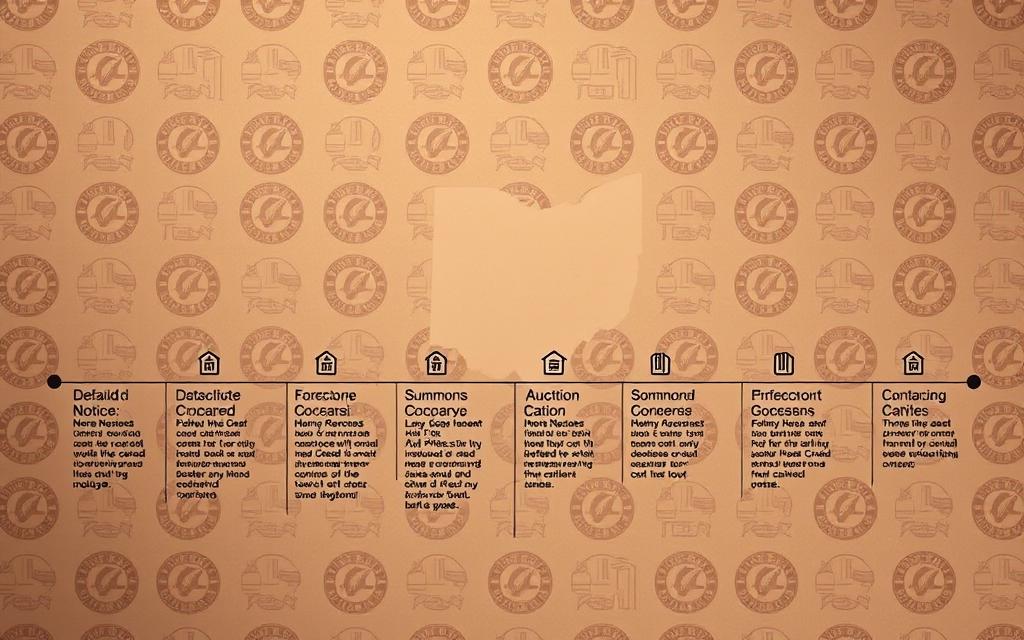
The foreclosure timeline in Ohio goes through many important stages. Each case is different, but most take 6 to 12 months.
Typical Foreclosure Progression
The Ohio foreclosure guide shows key steps for homeowners:
- First Missed Payment: Lender starts tracking
- 90-Day Missed Payment Period: Warning is sent
- Notice of Default: Legal notice is given
- Pre-Foreclosure Stage: Chance for loan change
- Judicial Foreclosure Filing: Court starts action
- Sheriff’s Sale: Property might be sold at auction
State-Specific Timeline Variations
Ohio’s foreclosure timeline can change for many reasons:
- How fast the local courts work
- How homeowners and lenders act
- What the lender plans to do
- How complicated the property’s ownership is
Homeowners facing foreclosure should talk to lenders and get legal help. This way, they can understand their situation and find other options.
Pre-Foreclosure Phase
The pre-foreclosure period in Ohio is very important. It’s when homeowners can stop losing their property. This time is usually 3-6 months after they miss payments.
To stop foreclosure in Ohio, start by talking to your lender. Know your rights and plan early.
Importance of Communication with Lenders
Talking to your lender can really help. They might want to work with you instead of taking your house.
- Contact your lender right away if you’re having money troubles
- Get ready with all your financial papers
- Ask for help finding other solutions
Options for Homeowners Facing Foreclosure
Ohio has ways to help homeowners in trouble:
- Loan Modification: Change your mortgage terms
- Repayment Plans: Pay back missed payments in a plan
- Short Sale: Sell your house for less than what you owe
- Deed in Lieu of Foreclosure: Give your house to the lender
Getting help from lawyers and financial experts is key. They can guide you through these tough choices.
Filing for Foreclosure
In Ohio, foreclosure starts when a lender takes action against a homeowner who hasn’t paid their mortgage. This important step has specific legal steps that must be followed. These steps are part of the Ohio court foreclosure timeline.
How Lenders Initiate Foreclosure
When a borrower misses mortgage payments, lenders do several things:
- They send missed payment notices.
- They send a formal foreclosure notice letter Ohio if payments keep being missed.
- They prepare legal papers for court.
The Court Filing Process
In Ohio, lenders must file a complaint with the local court. This document includes:
- Details of the mortgage agreement.
- Specific payment defaults.
- A request for court-supervised foreclosure.
After filing, borrowers get a legal summons. They usually have 28 days to respond. This time is key for homeowners to get legal advice or talk to their lender.
Local Court Involvement
Ohio courts are key in the foreclosure process. They check the lender’s complaint and make sure all legal steps are followed. They also help solve disputes between lenders and borrowers.
Knowing these early steps can help homeowners deal with Ohio’s foreclosure process better.
Responses to Foreclosure Notices
Getting a foreclosure notice in Ohio can feel scary. Knowing your rights and acting fast is key to save your home and money. The foreclosure notice letter Ohio is a big moment for homeowners to make quick, smart choices.
When you get a foreclosure notice, you have legal ways to fight it. Ohio’s homeowner rights offer several paths to avoid losing your property:
- Respond to the foreclosure complaint within 28 days
- Request a loan modification
- Seek legal help foreclosure Ohio professionals
- Explore mediation opportunities
- Negotiate a repayment plan with the lender
Understanding Your Initial Response Window
The time after getting a foreclosure notice is very important. Not responding on time can lead to a default judgment. This makes it harder to save your home.
| Response Option | Potential Outcome | Recommended Action |
|---|---|---|
| Written Answer | Contests Foreclosure | File within 28 days |
| Loan Modification | Restructures Mortgage | Contact Lender Immediately |
| Legal Consultation | Professional Guidance | Seek Specialized Attorney |
Seeking Professional Legal Assistance
Foreclosure is complex and needs a pro’s help. Legal experts in Ohio can give advice that fits your situation. They might help you keep your home or lessen financial loss.
The Court Process

Understanding the legal foreclosure process in Ohio is key. It’s important when facing the loss of your home through court actions. The timeline in Ohio courts is critical for homeowners.
When a foreclosure case goes to court, several steps happen. These steps decide what happens to your property. It’s important for homeowners to know each step to protect themselves.
Initial Hearing: Expectations and Preparation
At the initial hearing, several important things happen:
- Lenders show proof of default
- Homeowners can challenge the foreclosure
- Judges look at the evidence and arguments
- There might be chances to negotiate
Final Judgment: Implications and Consequences
The final judgment is a big moment in Ohio foreclosure. It can:
- Confirm the lender’s right to take the property
- Set a timeline for selling the property
- Determine money the homeowner might owe
- Affect the homeowner’s credit score
Homeowners facing foreclosure should get legal help. This way, they can understand their rights and options during this tough time.
Post-Judgment Timeline
After a foreclosure judgment, homeowners face a critical time. The sheriff sale Ohio timeline is key for both owners and buyers. It shapes the future of the property.
The path from court judgment to auction has important steps. In Ohio, auctions happen three to six months after the court’s final say.
Foreclosure Sale Scheduling
Scheduling a foreclosure sale needs careful steps:
- Official notice must be published in local newspapers
- Property must be appraised at fair market value
- Minimum sale price determined by court assessment
- Public auction conducted by county sheriff
Redemption Period Dynamics
The redemption period Ohio offers a chance for homeowners. They can get their property back by paying the full debt.
- Standard redemption period: 30-90 days
- Requires full payment of judgment amount
- Includes all associated legal and auction expenses
Knowing these timelines helps homeowners make smart choices. Getting legal advice is also a good idea during tough times.
Understanding Foreclosure Sales
Foreclosure sales in Ohio are key for lenders to get back what they lost. These auctions let lenders sell properties to make up for lost money.
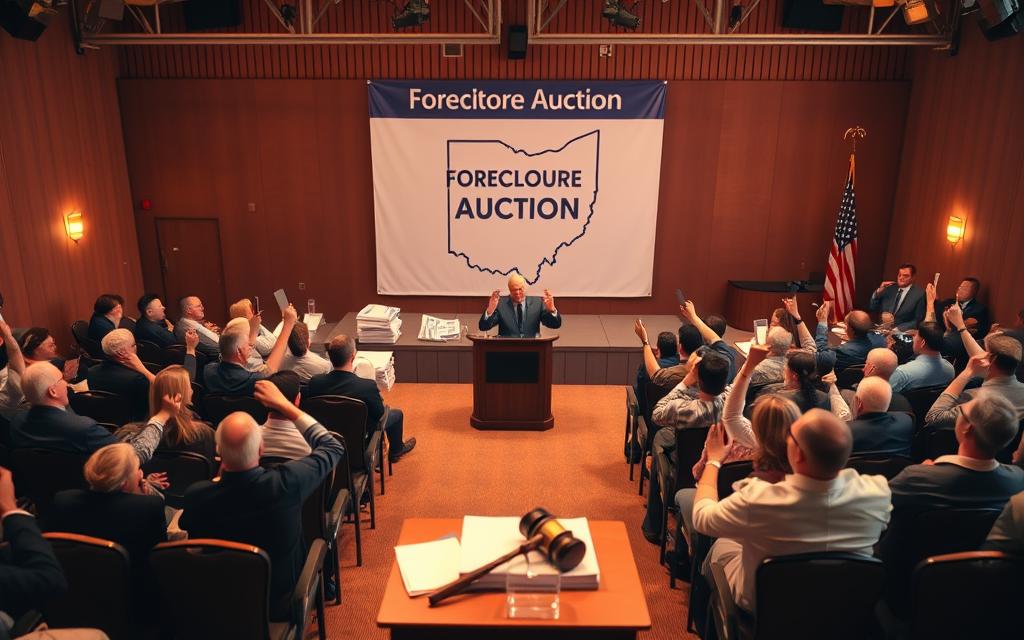
Ohio’s foreclosure auctions are run by sheriffs. They follow strict rules. It’s important for buyers and homeowners to know these rules.
Types of Auctions in Ohio
Ohio has different types of foreclosure auctions. Each one is special:
- Sheriff’s Sales: The most common Ohio foreclosure auction method
- Online Auctions: Increasingly popular digital platforms
- Courthouse Step Sales: Traditional in-person bidding events
Bidding Process and Procedures
The sheriff sale Ohio timeline is clear. Buyers must:
- Register as a qualified bidder
- Provide required financial documentation
- Understand minimum bid requirements
- Prepare funds for immediate payment
After winning, the Ohio eviction after foreclosure starts. Winners get a deed. They must follow legal steps to own the property.
Navigating foreclosure sales requires careful preparation and understanding of local regulations.
Impact of Foreclosure on Homeowners
Facing foreclosure in Ohio can cause big legal and money problems. The Ohio mortgage default process has serious effects that go beyond losing a home. Knowing these impacts helps people get ready and protect their money future.
- Severe damage to personal credit scores
- Potential long-term legal ramifications
- Reduced future borrowing capabilities
- Potential wage garnishment
Legal Consequences
The legal foreclosure process in Ohio can lead to big problems. Homeowners might have to pay off mortgage balances after the sale. Ohio courts can let lenders get more money, causing more financial stress.
Credit Score Impact
A foreclosure can really hurt your credit score. It usually lowers scores by 100-300 points. Ohio homeowner rights help, but credit damage lasts 7 to 10 years. This makes it hard to get loans in the future, affecting jobs and life chances.
Getting help early can lessen these long-term effects. Talking to experts and knowing your rights can make a big difference. It helps Ohio residents deal with these tough financial issues.
Strategies to Challenge Foreclosure
Facing foreclosure is tough for Ohio homeowners. Knowing your legal options is key to save your home and money. Legal help in Ohio offers ways to fight foreclosure and protect your rights.
Homeowners can use many legal reasons to fight foreclosure. Finding these reasons can help a lot in your case.
Legal Grounds for Defense
- Improper documentation or procedural errors
- Violations of lending laws
- Predatory lending practices
- Lack of proper foreclosure notice
- Questionable lender standing
Working with Foreclosure Defense Attorneys
Choosing a good foreclosure defense attorney is very important. They know how to find defenses and deal with legal stuff.
| Defense Strategy | Potential Outcome |
|---|---|
| Challenging Loan Documentation | Potential loan modification or dismissal |
| Proving Procedural Errors | Temporary or permanent halt of foreclosure |
| Investigating Predatory Lending | Potential loan rescission or compensation |
When looking for legal help in Ohio, find attorneys with success in foreclosure defense. Ask about their experience, success rates, and how they fight foreclosures.
When picking a foreclosure defense attorney, think about their experience. They should know Ohio foreclosure laws well and want to protect your rights.
Alternatives to Foreclosure
Homeowners in Ohio facing mortgage default have many ways to stop foreclosure. These options can help reinstate your loan and save your home.
Looking into different alternatives is key to saving your home and money. Each option has its own benefits, based on your financial situation.
Loan Modifications and Repayment Plans
Loan modifications can really help if you’re having trouble with mortgage payments. These changes might include:
- Extending the loan term
- Lowering interest rates
- Pausing payments for a while
- Changing the mortgage balance
Short Sales and Deeds in Lieu of Foreclosure
If loan reinstatement is hard, you might look into other ways to leave your home:
- Short Sale: Selling your home for less than what you owe
- Deed in Lieu of Foreclosure: Giving your home to the lender
Choosing between these options needs careful thought and talking to lenders. A housing counselor or real estate lawyer can guide you to the best choice for you.
Understanding Ohio’s Anti-Deficiency Laws
Ohio’s foreclosure laws can be tricky to understand. They are key for homeowners facing tough financial times after losing their home.
Anti-deficiency laws help homeowners avoid extra money troubles after losing their home. In Ohio, these laws give homeowners big financial benefits.
Protecting Homeowner Rights
Ohio protects homeowners from big money problems. The state’s anti-deficiency laws stop lenders from asking for more money if the sale price is low.
- Limits lender’s ability to collect remaining mortgage debt
- Provides financial protection for homeowners after foreclosure
- Reduces possible long-term money troubles
Key Exceptions to Consider
Even with Ohio’s anti-deficiency laws, some exceptions exist:
- Commercial properties may have different rules
- Investment properties might not get full protection
- Some loan types have special rules
Homeowners facing foreclosure should talk to a lawyer who knows Ohio’s foreclosure laws. This way, they can understand their situation and what protections they have.
Resources for Homeowners in Foreclosure
Facing foreclosure in Ohio can feel really tough. But, there are many resources to help. Knowing your rights and getting legal help can really help stop foreclosure.
Ohio has many support systems for homeowners facing loss. These help guide and offer solutions during tough times.
State Assistance Programs
Ohio has state programs to help homeowners avoid foreclosure:
- Ohio Save Our Homes Program
- Foreclosure Prevention Hotline
- Emergency Mortgage Assistance Program
Non-Profit Organizations
Many non-profits offer free counseling and legal help:
| Organization | Services Offered | Contact Information |
|---|---|---|
| NeighborWorks America | Housing counseling, financial advice | (614) 221-4000 |
| Legal Aid Society of Cleveland | Free legal consultation | (888) 401-5018 |
| Ohio Housing Finance Agency | Mortgage assistance programs | (888) 362-6432 |
Getting help early is key when facing foreclosure. These resources can offer good options and ways to keep your home.
Conclusion: Navigating the Foreclosure Process
Facing foreclosure in Ohio can feel very scary. The foreclosure process in Ohio is long and tricky. Knowing each step helps protect your home and money.
Getting help from a foreclosure lawyer in Ohio is very important. Lawyers who know real estate law can guide you well. They help you find other ways to solve problems, talk to lenders, and defend your rights.
Importance of Professional Guidance
It’s key to work with housing counselors and financial advisors who know Ohio’s rules. They can look at your situation, suggest solutions, and maybe stop foreclosure. Talking early and often can really help.
Staying Informed and Proactive
Knowing your rights is your best defense against foreclosure. Keep up with your rights, look at all options, and keep good records. By understanding the law and getting help early, you can protect your money and home.