
 George
 Are you drowning in mortgage debt with no way out? There’s a strategic escape that could help you avoid foreclosure’s bad effects.
A deed in lieu of foreclosure is a big help for homeowners in trouble. It lets property owners give their property’s title to the lender. This stops the foreclosure process from happening.
When you can’t pay your mortgage, a deed in lieu might be the answer. It’s a better way than foreclosure to solve mortgage problems. It’s more collaborative and less harmful.
Key Takeaways
- A deed in lieu is a voluntary property transfer to avoid foreclosure
- It can help minimize credit score damage
- Lenders must approve the deed in lieu process
- Homeowners can potentially negotiate more favorable terms
- Professional legal advice is recommended before proceeding
Understanding the Basics of a Deed in Lieu
Dealing with mortgage problems can be tough. A deed in lieu is a smart way to avoid foreclosure. It helps homeowners who can’t pay their mortgage.
Homeowners looking for other options than foreclosure like deed in lieu. It’s when a homeowner gives the property to the lender to solve a loan problem.
Definition of a Deed in Lieu
A deed in lieu is when a homeowner gives the property to the lender. This helps avoid foreclosure and can also protect credit scores.
- Voluntary property transfer
- Negotiated settlement with mortgage lender
- Alternative to foreclosure proceedings
The Process of Obtaining a Deed in Lieu
Getting a deed in lieu takes a few steps. Homeowners need to show they can’t pay and work with their lender.
- Contact the mortgage lender
- Provide financial documentation
- Negotiate property value
- Complete legal transfer
Key Terminology Related to Deeds in Lieu
| Term | Definition |
|---|---|
| Property Valuation | Assessment of current market value |
| Deficiency Waiver | Lender agreement to forgive remaining mortgage balance |
| Title Transfer | Legal process of changing property ownership |
Knowing these basics helps homeowners decide on a deed in lieu. It’s a way to handle mortgage problems.
Advantages of Choosing a Deed in Lieu
Dealing with mortgage troubles can be tough for homeowners. A deed in lieu is a smart choice instead of going through foreclosure. It helps homeowners understand their options better.
- Faster resolution than foreclosure
- Less damage to credit score
- Fewer legal issues
- Chance for a fresh start
Avoiding Foreclosure
A deed in lieu is a smart way to avoid foreclosure. It lets homeowners give their property to the lender. This way, they can avoid a lot of stress and possibly get better deals.
Quick Resolution for Homeowners
This process is faster than foreclosure. Lenders like it because it saves them money. Homeowners get to solve their problems quicker.
Potential Benefits for Credit Score
A deed in lieu might hurt your credit score, but not as much as foreclosure. It can help you recover your credit faster. Talking to your lender can help keep your credit score better.
Disadvantages of a Deed in Lieu
The home surrender process might seem good at first. But, homeowners need to think about the downsides of a deed in lieu. Knowing the pros and cons can help them make smart choices about their money.
Dealing with a deed in lieu has its challenges. Homeowners should know the bad sides before choosing this instead of foreclosure.
Impact on Credit Score
A deed in lieu can hurt your credit score a lot. It will be shown to credit agencies, which can lower your score a lot. This might make it hard to get loans or credit later.
- Credit score drop of 100-150 points
- Negative mark on credit report for 7 years
- Harder to get loans or credit
Risk of Tax Implications
Home surrender can lead to unexpected taxes. Forgiven debt may be seen as taxable income by the IRS. This could add to your financial stress.
- Potential tax on forgiven mortgage debt
- Must report cancellation of debt income
- May need a tax expert
Title Issues
Deed in lieu deals can cause title problems. Homeowners might face issues with owning the property in the future.
- Potential liens or claims on the property
- Challenges with future property deals
- Legal issues with owning the property
It’s important to think about these downsides when considering a deed in lieu. Talking to financial and legal experts can help you understand this complex process better.
Who Qualifies for a Deed in Lieu?
Understanding who can get a deed in lieu is tricky. It’s a way to avoid foreclosure for those in financial trouble. It lets homeowners transfer their deed to the lender.
Lenders look at many things when you apply for a deed in lieu. You need to show you’re really struggling financially. And you must meet certain rules to qualify.
Residential vs. Commercial Property Considerations
Rules for residential and commercial properties are different. Homeowners usually have it easier than business owners when it comes to deed in lieu.
- Residential properties: More lenient qualification standards
- Commercial properties: Stricter financial documentation requirements
- Property equity plays a significant role in approval
Key Factors Lenders Evaluate
| Qualification Criteria | Residential Requirements | Commercial Requirements |
|---|---|---|
| Financial Hardship | Documented income loss | Verified business revenue decline |
| Property Value | Market value assessment | Comprehensive property appraisal |
| Mortgage Status | Serious default risk | Substantial payment delinquency |
Financial Hardship Criteria
To get a deed in lieu, you must show you’re really struggling. Hardship reasons include job loss, medical emergencies, divorce, or big income drops.
- Provide detailed financial documents
- Show you can’t make mortgage payments
- Explain why you can’t refinance
It’s important to check your situation and talk to a financial expert. They can help figure out if you qualify for a deed in lieu.
The Deed in Lieu Process Explained
Dealing with the deed in lieu process can be tough for homeowners in tough spots. It’s a way to avoid foreclosure. It might help solve mortgage problems.
The deed in lieu timeline has key steps. You need to talk clearly with your lender at each stage.
Initial Communication with the Lender
Homeowners should start by talking to their lender. This first step is important. You need to:
- Tell them about your money troubles
- Show they can’t get mortgage payments
- Say you want a deed in lieu solution
Documentation and Requirements
Lenders want lots of papers to look at your request. You should get ready with:
- Financial statements
- Proof of income loss
- Property value papers
- A letter explaining your hard times
Finalizing the Deed
The last step is agreeing and transferring the property. Important things to think about include:
- Talking about forgiving some debt
- Understanding tax issues
- Finishing up legal papers for the property
Every step in the deed in lieu process needs careful planning. You should get help from experts. This way, you can avoid big money problems.
Alternatives to a Deed in Lieu
Homeowners facing money troubles have many ways to avoid losing their home. A deed in lieu is one choice, but there are others. Knowing these options can help homeowners make smart choices for their future.
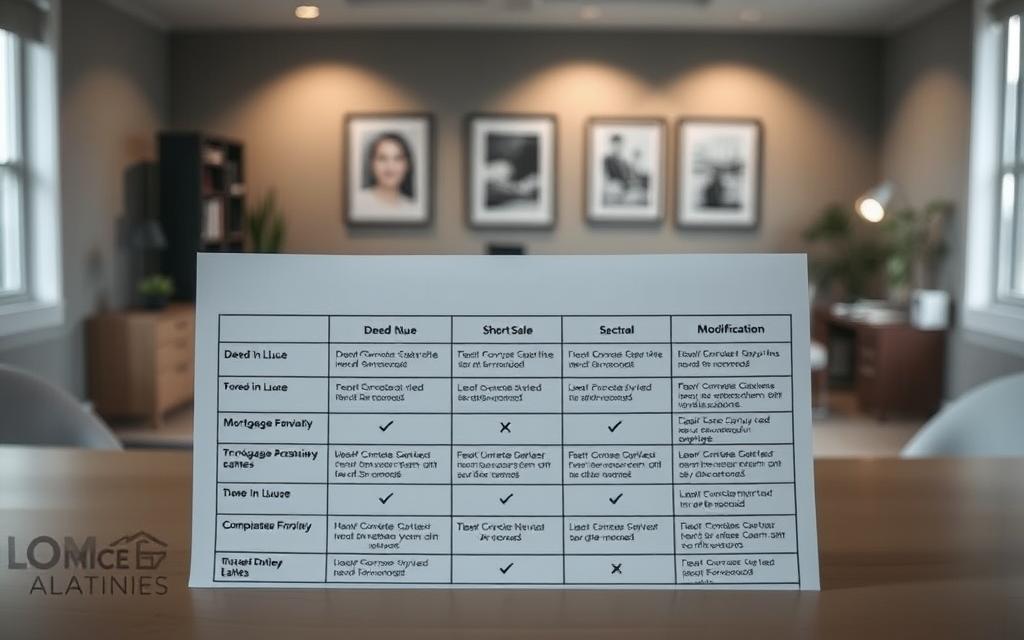
When deciding between a deed in lieu and a short sale, think about your own situation. Each choice affects your credit score and financial health differently.
Short Sales: A Viable Alternative
Short sales are another way to handle mortgage problems. In a short sale, the house sells for less than the mortgage. The lender must agree.
- Potential for lower credit score impact compared to foreclosure
- Allows homeowner to negotiate with the lender
- Typically takes longer to process than a deed in lieu
Loan Modifications: Restructuring Your Mortgage
Loan modifications let homeowners change their mortgage terms. This can lower monthly payments and stop foreclosure.
| Option | Credit Score Impact | Processing Time |
|---|---|---|
| Deed in Lieu | Significant negative impact | Relatively quick |
| Short Sale | Moderate negative impact | Longer processing |
| Loan Modification | Minimal impact | Varies by lender |
Bankruptcy: A Last Resort Option
Bankruptcy is a serious legal step that can give temporary relief. It should be considered only after talking to a financial advisor or lawyer.
Bankruptcy usually has the biggest negative effect on your credit score. Think carefully about the long-term effects before choosing this path.
Legal Considerations
Dealing with a deed in lieu needs careful thought and expert advice. If you’re facing money troubles, it’s key to know the legal side of mortgage forgiveness and property moves.
Getting legal help for a deed in lieu is very important. It helps keep your rights safe and makes sure the property transfer goes well. Each state has its own rules that can change how your deed in lieu works.
Consulting a Legal Professional
Getting legal advice is a big plus when thinking about a deed in lieu:
- They can look at your money situation closely
- They can explain the legal stuff you might face
- They can help avoid legal problems
- They can talk to lenders for you
Understanding State-Specific Laws
State laws can really change how a deed in lieu works. Legal advice is key to understanding these laws. Some things to think about include:
- Rules about getting sued for money you owe
- How property transfer affects your taxes
- Laws that protect homeowners
- How mortgage forgiveness works in your state
Title Transfer Implications
Transferring the property title is a complex process. A good lawyer can explain the risks and help protect your money during a deed in lieu.
When thinking about a deed in lieu, be smart. Use legal help to get the best outcome for you.
The Role of Lenders in a Deed in Lieu
Understanding the role of lenders in a deed in lieu is key. Homeowners facing default have to deal with banks. This can greatly affect their financial future.
Lenders see deed in lieu as a way to manage risks. They want to find solutions that work for both sides. This helps them avoid big losses.
Lender Approval Process
The approval process has several important steps:
- Checking if you really need help
- Looking at your property’s condition
- Seeing if the property is worth something
- Looking at your past payments
Evaluating Property Value
Lenders use many ways to check your property’s value:
- Getting an expert’s opinion
- Comparing with similar homes
- Looking at the local real estate
- Thinking about how much fixing it might cost
Negotiation Strategies
Good negotiations need good preparation and talking skills. To do well, homeowners should:
- Have all your financial papers ready
- Know what the real estate market is like
- Show that you really need help
- Be honest about your property’s state
Every lender is different. So, talking to them in a way that works for you is very important.
Financial Implications of a Deed in Lieu
Understanding the money side of a deed in lieu is key. Homeowners facing foreclosure need to know the money details of this option.
Talking to the lender is very important. Homeowners must be ready for money challenges during these talks.
Loan Balance vs. Property Value
It’s important to know if your loan is more than your house’s value. You might face:
- Negative equity situations where the loan exceeds property value
- Potential partial debt forgiveness
- Negotiating remaining balance settlements
Possible Tax Consequences
Taxes can affect your money a lot. The IRS might see forgiven debt as income. It’s wise to talk to a tax expert about this.
Long-Term Financial Planning
A deed in lieu can change your money situation for a long time. Think about these steps:
- Rebuild credit through disciplined financial management
- Create a savings plan to recover from possible money problems
- Develop a plan for future homes
Planning ahead can lessen the deed in lieu’s long-term effects. It can turn a tough spot into a chance to get back on track financially.
Impact on Future Homeownership
Getting back into homeownership after a deed in lieu is tough. This way out of mortgage trouble has big financial challenges. You need to plan carefully and work hard to get back on track.

Getting over a bank-owned property transfer is a big job. You must fix your financial health and find new housing chances.
Buying a Home Post-Deed in Lieu
Those who have done a deed in lieu face long waits to get a new mortgage:
- Conventional loans: 4-7 years waiting period
- FHA loans: 3 years with special reasons
- VA loans: Maybe 2 years with certain rules
Timeframe for Rebuilding Credit
Fixing your credit takes smart money habits. Here’s how to do it:
- Pay bills on time
- Get secured credit cards
- Check your credit reports often
| Credit Score Range | Recovery Timeline | Recommended Actions |
|---|---|---|
| Below 600 | 3-5 years | Work hard on credit |
| 600-680 | 2-4 years | Stay financially disciplined |
Renting vs. Buying
After a deed in lieu, renting might be best at first. It helps you get your finances in order while you work on your credit.
Think of the deed in lieu as a chance to start fresh. Focus on getting your finances strong for when you can buy a home again.
Case Studies of Deed in Lieu
Real-life stories teach us a lot about property deals and mortgage options. These stories show how deed in lieu works. They help homeowners who are struggling financially.
Successful Outcomes in Property Resolution
Sarah Martinez from San Diego knew how to handle her mortgage. She lost her job during the pandemic. So, she talked to her lender about a deed in lieu.
She did a few important things:
- She showed her financial struggles.
- She gave detailed income statements.
- She made a clear plan for returning the property.
Her plan worked well. It saved her credit score and avoided foreclosure. Her story shows the value of talking to lenders early.
Lessons from Complex Challenges
Michael Thompson’s story shows the challenges of deed in lieu. His deal faced many problems:
- There were many liens on the property.
- He didn’t have all the needed documents.
- They disagreed on the property’s value.
His story teaches us the importance of being well-prepared. It also shows the need for legal help when dealing with mortgage options.
Real-Life Financial Transformations
Every deed in lieu story is different. But the best ones share some common traits:
- They talk openly with lenders.
- They have all the financial papers ready.
- They solve problems quickly and wisely.
These stories show that a deed in lieu can be a kind way out of financial trouble.
Resources for Homeowners
Dealing with a deed in lieu legal guide can feel hard. But, there are many resources to help. Knowing your options can help you handle your property problems better.

Homeowners can find many important support channels. These can guide you during tough financial times:
Counseling Services
Professional housing counselors are very helpful. They can assist with deed in lieu options. They help homeowners:
- Check their financial situation
- Learn about legal stuff
- Make plans just for them
- Talk to lenders
Online Tools and Calculators
Online tools have changed how we deal with money problems. Many websites offer free tools to help:
- Mortgage default calculators
- Credit impact simulators
- Tools to check financial hardship
- Platforms for comparing things
Support Groups
Having community support is key during hard times. Local and online support groups give emotional and practical help. They help homeowners thinking about a deed in lieu.
Look into HUD-approved counseling agencies, financial planning websites, and legal aid centers. These places offer a lot of help. They help homeowners make smart choices about their property and money.
FAQs About Deeds in Lieu
Understanding a deed in lieu of foreclosure can be tricky. This section answers common questions homeowners have about this option.
Common Misconceptions About Deeds in Lieu
Many homeowners don’t get what a deed in lieu is. Here are some big misunderstandings:
- A deed in lieu is not the same as a foreclosure
- It doesn’t always wipe out mortgage debt
- Lenders don’t have to accept a deed in lieu
When to Seek Professional Help
Getting help from experts is key for a deed in lieu of foreclosure in these cases:
- When your finances are complicated
- If your property has many liens
- With a big mortgage balance left
- When you worry about taxes
Tips for a Smooth Process
To make deed in lieu negotiations go well, prepare carefully. Follow these expert tips:
| Preparation Step | Recommended Action |
|---|---|
| Financial Documentation | Gather all your financial records |
| Property Valuation | Get an appraisal from a neutral source |
| Legal Consultation | See a real estate lawyer |
Knowing about a deed in lieu means looking at your financial situation closely. Every case is different. Getting advice from a pro can guide you through this complex path.
The Future of Real Estate and Deeds in Lieu
The world of mortgage default options is changing fast. Homeowners now face new ways to deal with money troubles. It’s key to keep up with these changes.
The real estate market is changing a lot. New tech and economic rules are affecting how we handle money problems. This means homeowners have new choices for dealing with tough times.
Market Trends Shaping Mortgage Defaults
- Digital mortgage platforms increasing transparency
- Growing acceptance of alternative foreclosure solutions
- Rise of data-driven lending decisions
Legislative Landscape
New laws are helping homeowners more. State and federal rules are getting better at helping with mortgage troubles.
| Legislative Focus | Potential Impact |
|---|---|
| Consumer Protection Laws | Enhanced homeowner rights |
| Foreclosure Mediation Programs | Increased negotiation opportunities |
| Debt Forgiveness Regulations | Reduced financial penalties |
Economic Factors Influencing Deeds in Lieu
Money ups and downs are leading to new ways to handle mortgage troubles. Voluntary foreclosure transfers are getting smarter. Homeowners want options that won’t hurt them too much later.
Experts say we’ll see more personal help for mortgage problems. They think we’ll use smart data and caring lending to help homeowners in tough times.
Conclusion: Is a Deed in Lieu Right for You?
Thinking about using a deed in lieu to avoid foreclosure? It’s important to think about your money situation first. Knowing the good and bad points of this option is key.
Every person’s money situation is different. So, you need to think about what’s best for you. Getting advice from a real estate lawyer or financial advisor can help a lot.
Looking into this option means doing a lot of research and planning. You need to gather all your financial papers. You also need to know how it might affect your credit score.
It’s not a one-size-fits-all solution. You should look at other ways to solve your money problems too. This way, you can make a choice that’s right for you.
Getting out of a tough money spot takes smart choices and advice from experts. Talking to mortgage pros, credit advisors, and lawyers can guide you. They can help you find the best way to protect your money.